Case study · Game design & illustration
Massive 4
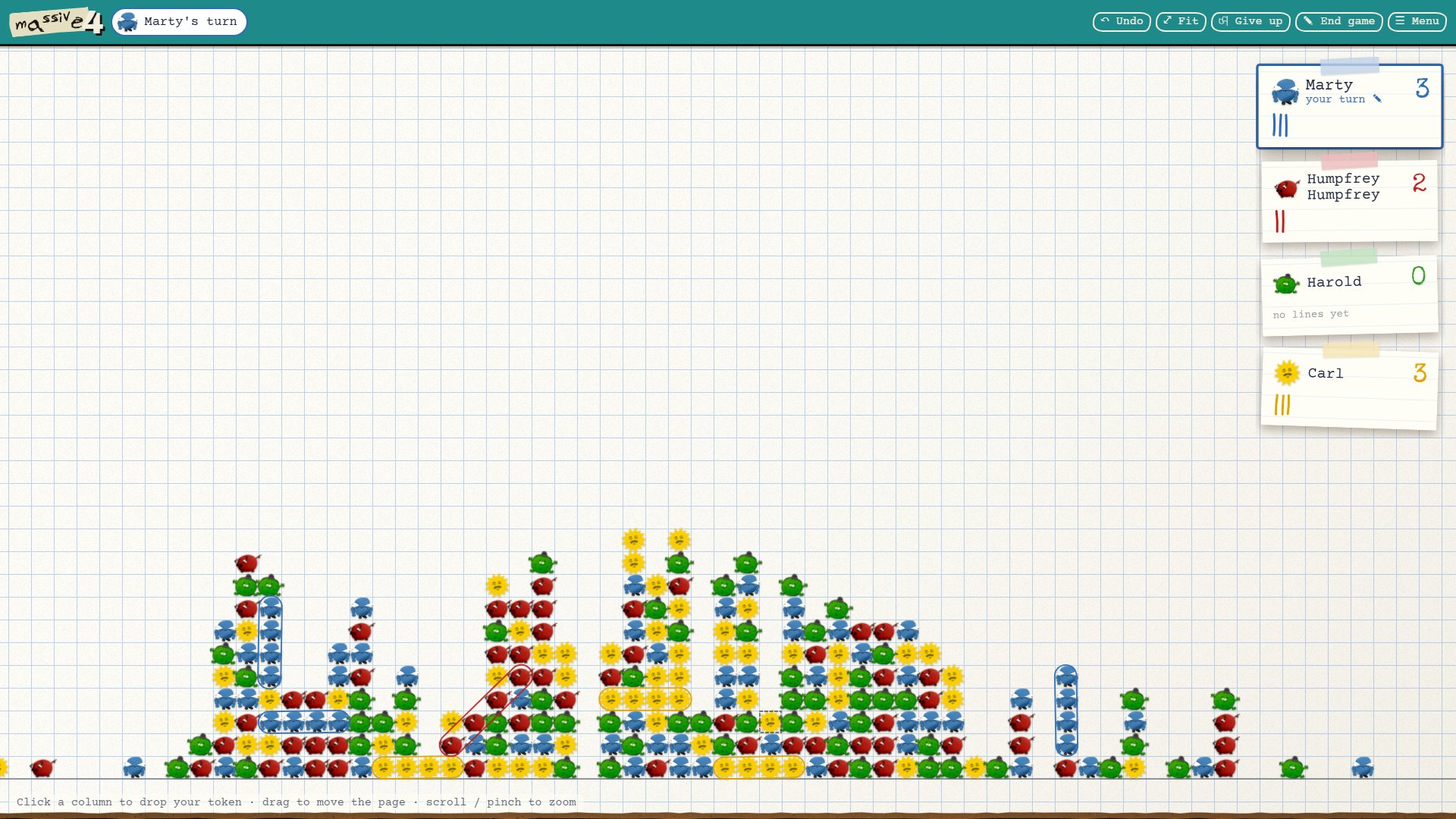
Four in a row on a whole notebook page — and the game doesn't stop at the first line. A game I invented at fifteen to survive boring classes, turned into a browser game you can play on any screen, alone, with friends or online.
01The origin
Invented at the back of the class
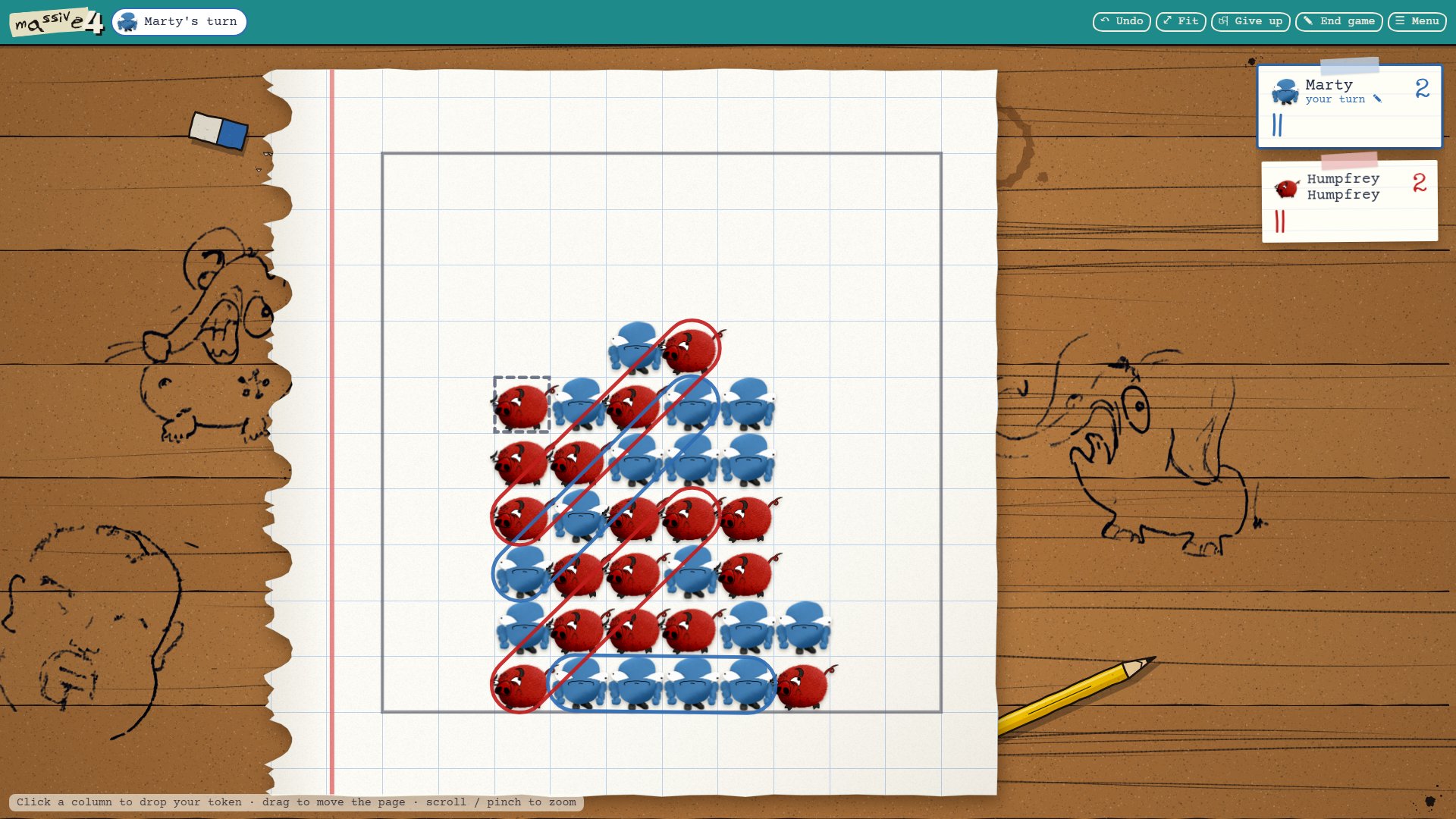
I was fifteen and bored in some lesson at secondary school. My notebook had squared paper, so I started playing four in a row on it with whoever was sitting next to me. But a page is much bigger than a board, so we never stopped at the first line: we kept going until the page was full, circling every four in a row in pen.
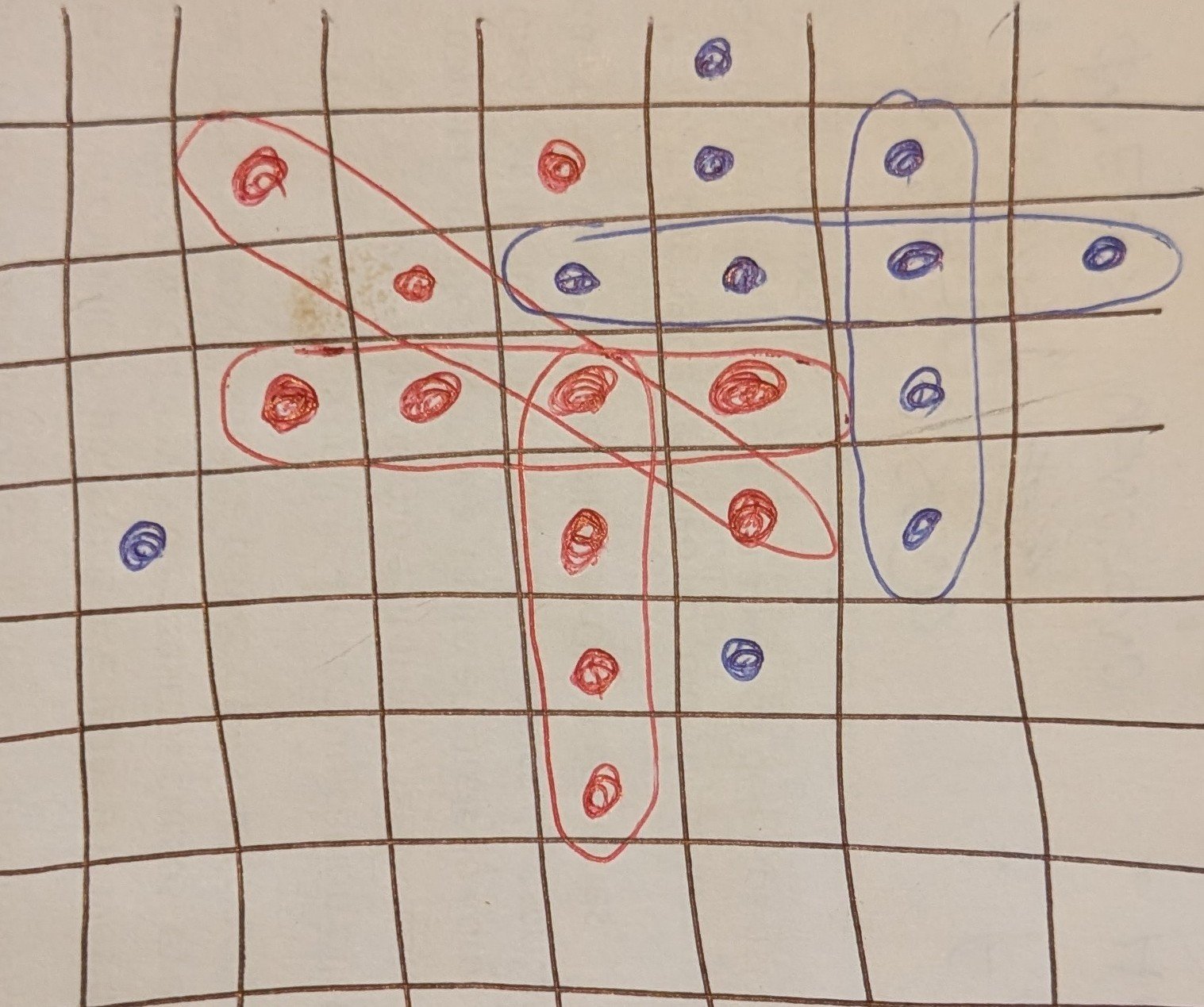
The original: pens and squared paper.
02The idea
Four in a row doesn't end the game. It scores a point.
That one change turns a five-minute game into a long, tactical one: you defend, block and build several lines at once, on a page as big as you dare. Most lines wins.
03From paper to rules
The same game, for any table
On paper the rules lived in our heads. A game needs them on screen, so the first design job was the menu: choosing who plays, how big the page is and what counts as a line, without reading any instructions.
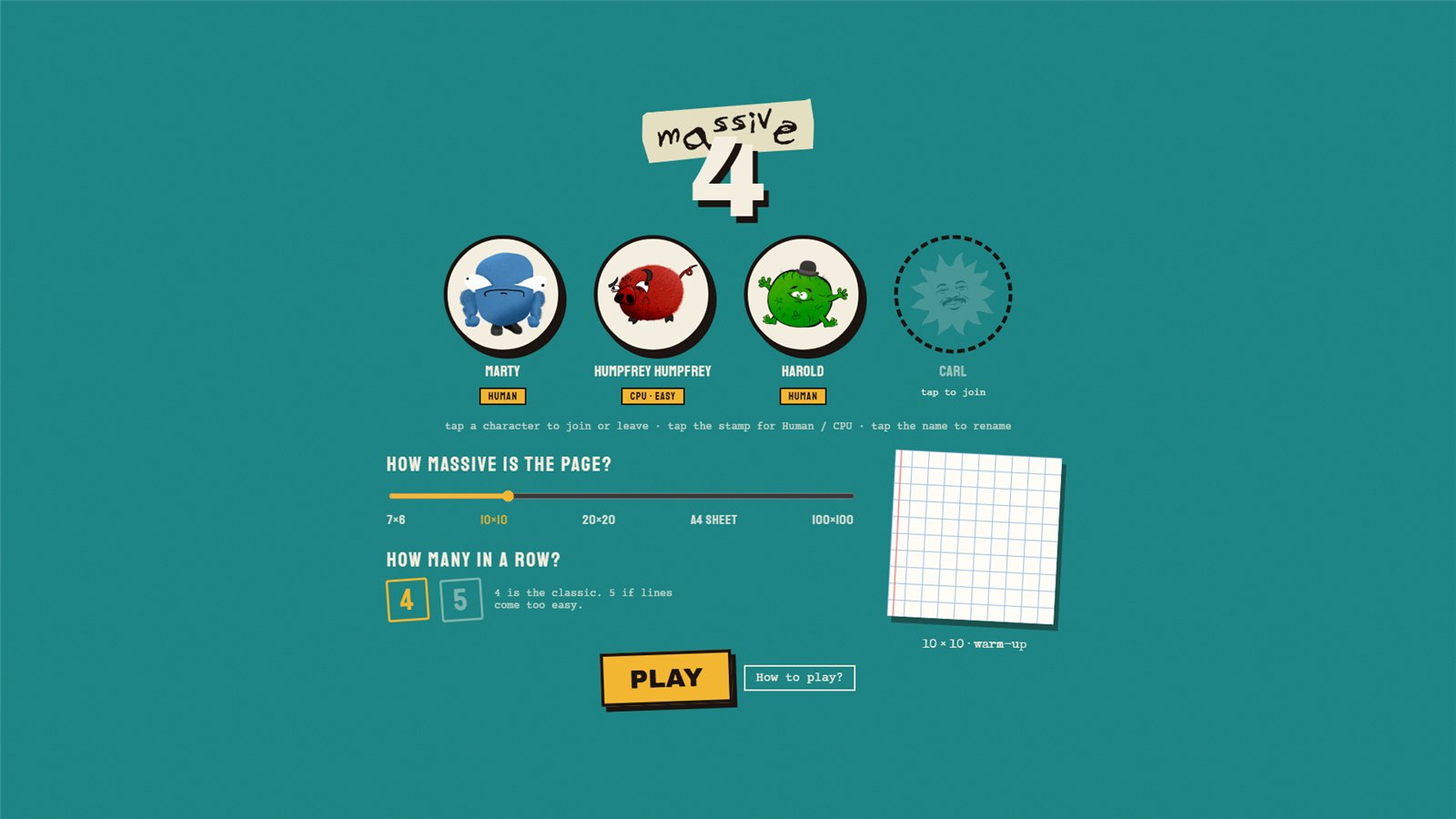
Start screen and menu: characters, page size and line length.
04The look
A notebook on a school desk
The game had to feel like where it was born. The board is a squared notebook page with its red margin, lying on a wooden desk with a pencil, an eraser and the doodles that end up carved on every school desk — drawn from my own old diary.
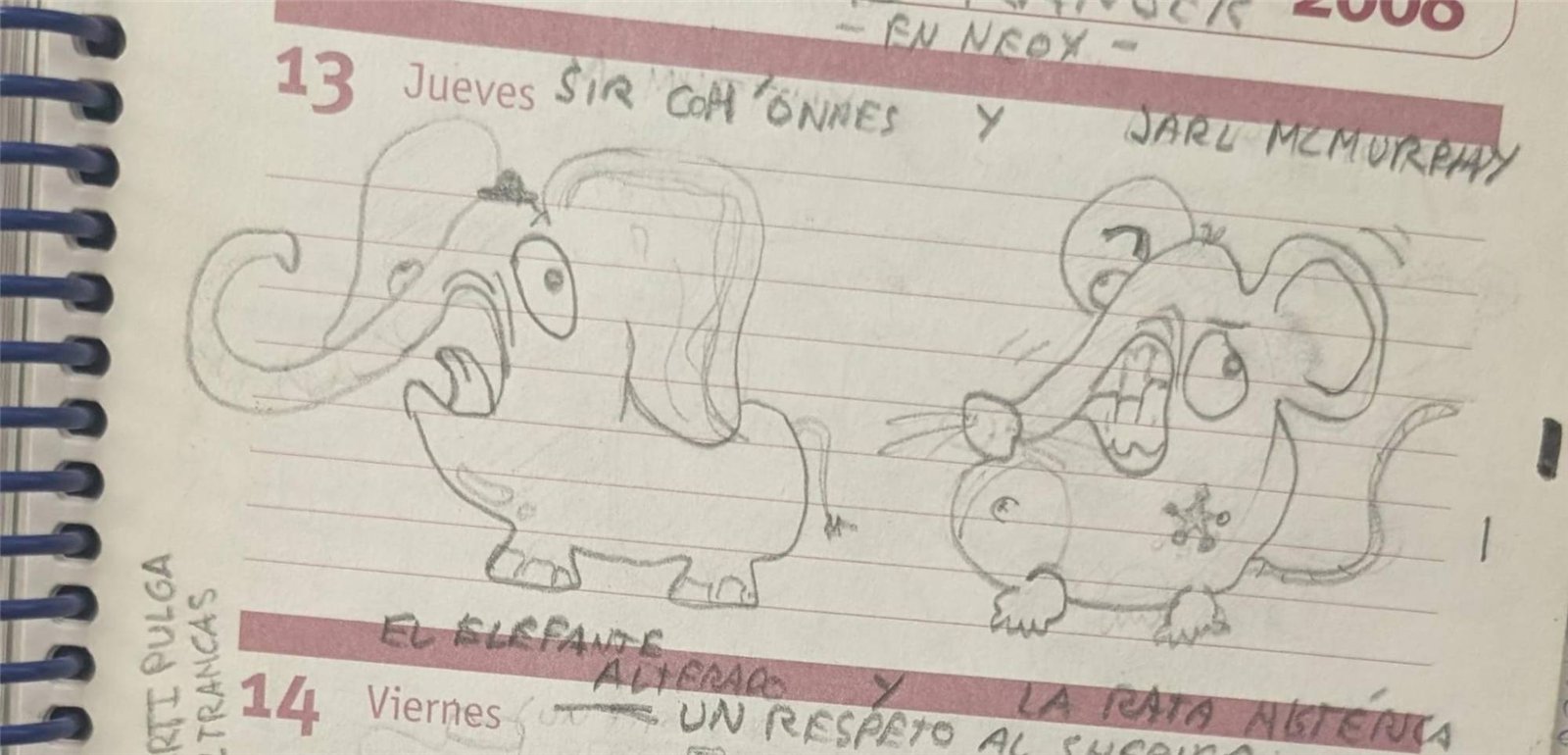
Doodles from an old diary…
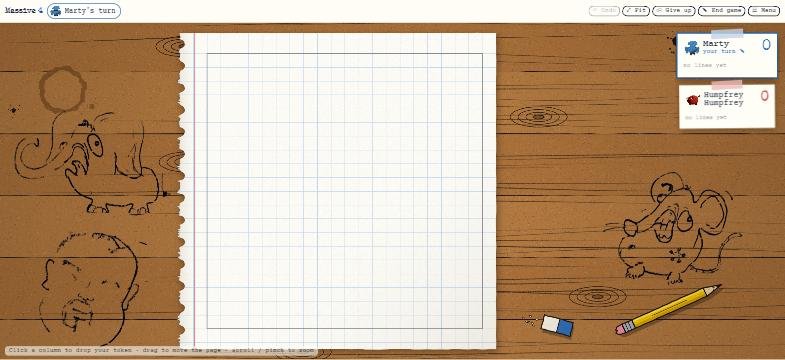
…carved into the game's desk.
05The characters
Tokens with a face
Instead of red and yellow discs, every player is a hand-drawn character, with its own colour so the page stays readable even at 100×100.




06Lettering & sound
My handwriting, my pen
I wrote the whole alphabet by hand on a piece of paper and turned it into the game's lettering, so every title looks written in the notebook. When you make a line, it gets circled with a pen stroke and the sound of a pen scribbling.
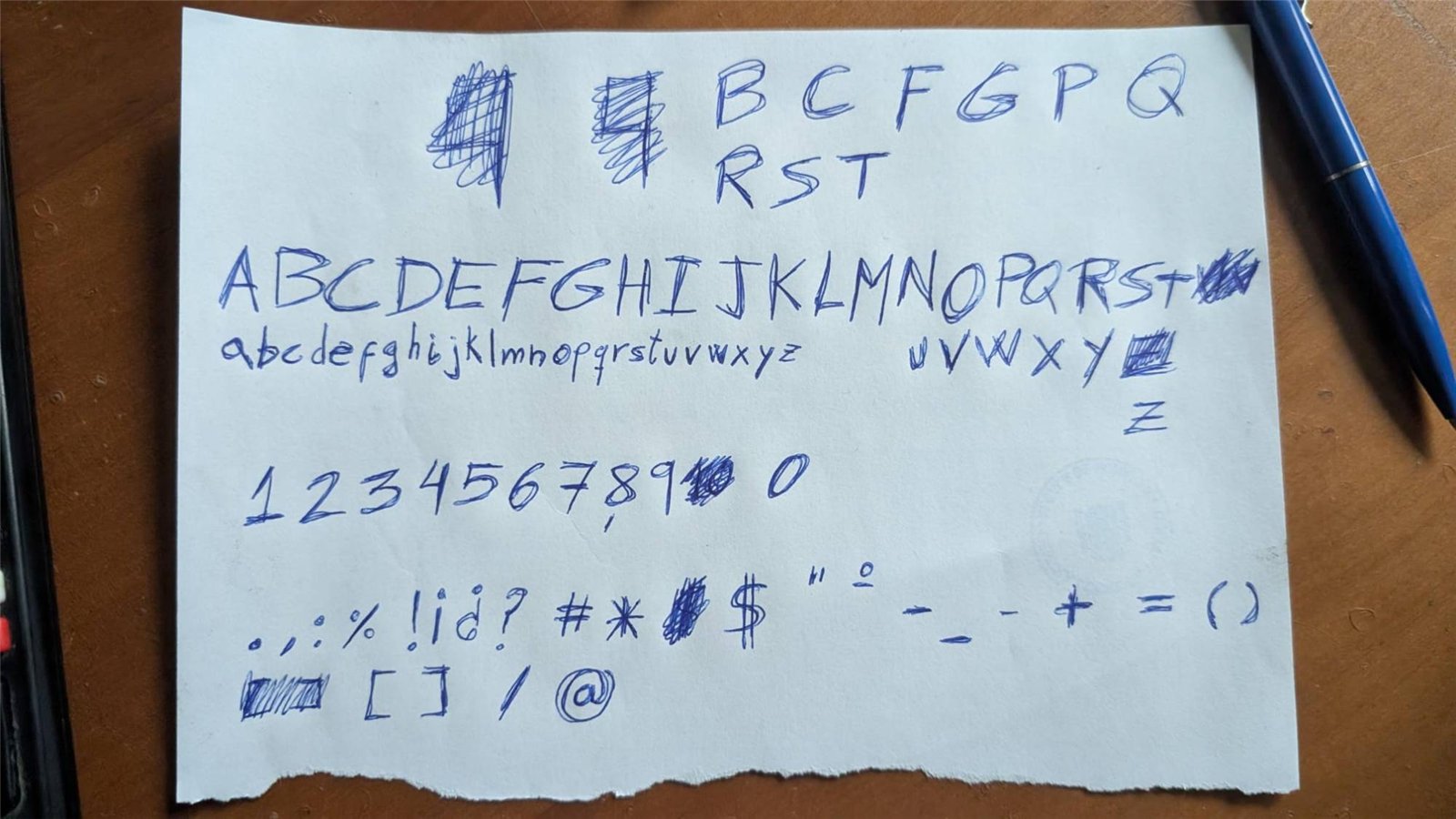
The alphabet behind the game's lettering.
07Online
The desk mate can be far away
The original needed someone sitting next to you. Now you can create a room and send the link: your friend picks a free character and joins the same page, with a small chat to talk while you play. Online games are between people only, no CPUs.
Promo video, 23 seconds.
08How it was made
Designer as director
I'm not a programmer. I designed the game — rules, screens, characters, lettering, sounds and every detail of how it should feel — and directed an AI (Claude) to write the code, testing and correcting each step until it played the way I wanted. It's a single web page that runs in any browser, on computer, tablet or phone.
09What I learned
A game is a design problem
Readability at any scale
The same page has to work with 42 squares or 10,000. Colour, contrast and zoom decide whether you can still follow the game.
Rules are interface
What friends explained to each other in class has to be obvious on screen, from the first menu to the last circled line.
Directing AI
Clear briefs, constant testing and a strong idea of the result let me ship a real product outside my usual tools.
More work